
Boost Impact: Nonprofit Consulting Services US
nonprofit consulting services US

Boost Impact: Nonprofit Consulting Services US

Unlock your organization's full potential with strategic, tailored consulting services designed for US nonprofits to thrive.

Find Your Consultant

Key Takeaways

  • ✓ The US nonprofit sector employs over 12 million people, contributing significantly to the economy.
  • ✓ Nonprofit consulting can lead to a 20-30% increase in fundraising efficiency for many organizations.
  • ✓ Strategic planning is the most sought-after consulting service among US nonprofits.
  • ✓ Over 75% of nonprofits consider external consulting crucial for navigating complex challenges.

How It Works

1
Initial Needs Assessment & Discovery

Consultants begin by thoroughly understanding your nonprofit's mission, current challenges, and long-term aspirations. This involves interviews, data review, and stakeholder engagement to identify key areas for intervention.

2
Tailored Strategy Development

Based on the assessment, a customized strategic plan is co-created, outlining specific goals, actionable steps, and measurable outcomes. This ensures alignment with your organization's unique context and resources.

3
Implementation & Capacity Building

Consultants guide your team through the execution phase, providing training, tools, and ongoing support. The focus is on transferring knowledge and building internal capabilities for sustainable success.

4
Monitoring, Evaluation & Adjustment

Progress is regularly monitored against established metrics, with consultants providing performance reports and recommendations. The strategy is iteratively refined to adapt to new challenges and opportunities, ensuring optimal impact.

Understanding the Vital Role of Nonprofit Consulting Services in the US

Group of volunteers smiling while sorting donation boxes indoors for a charity organization. Photo: Gustavo Fring / Pexels
The landscape for nonprofit organizations in the United States is one of both immense opportunity and significant challenge. From securing sustainable funding to navigating complex regulatory environments and demonstrating measurable impact, nonprofits constantly grapple with multifaceted demands. This is where specialized nonprofit consulting services US become not just beneficial, but often essential for sustained growth and mission fulfillment. These services offer external expertise, an objective perspective, and a wealth of experience that can be difficult to cultivate internally, especially for organizations with limited resources. Consultants bring fresh eyes to persistent problems, identify hidden opportunities, and introduce best practices from across the sector. At its core, nonprofit consulting aims to strengthen an organization's capacity to achieve its mission. This can manifest in various forms, including strategic planning, fundraising development, board governance, program evaluation, marketing and communications, and even interim leadership. For many nonprofits, the day-to-day demands of service delivery leave little time for long-term strategic thinking or proactive problem-solving. A consultant steps in to fill this gap, providing dedicated focus on these critical areas. They can help an organization clarify its vision, refine its strategic objectives, and develop a clear roadmap for the future. For instance, a consultant specializing in fundraising might help a small charity diversify its donor base, launch a capital campaign, or optimize its grant writing process. Without this specialized guidance, many organizations risk stagnation, burnout, or failure to adapt to evolving donor expectations and community needs. The investment in consulting is often recouped many times over through increased efficiency, enhanced revenue generation, and a more robust organizational structure. Furthermore, the external validation and strategic insights provided by consultants can bolster an organization's credibility with donors, foundations, and community partners, reinforcing trust and encouraging further investment in its mission. They act as catalysts for change, helping organizations move beyond reactive problem-solving to proactive, impact-driven growth. The value proposition is clear: leverage specialized knowledge to amplify your impact and secure your future in a competitive and ever-changing environment.

Key Areas Where Nonprofit Consulting Drives Impact and Growth

Close-up of charity boxes labeled for donation, featuring medicine and colorful paper cups. Photo: RDNE Stock project / Pexels
Nonprofit consulting services in the US encompass a broad spectrum of expertise, each designed to address specific organizational needs and challenges. Understanding these key areas helps nonprofits identify where external support can yield the greatest return on investment. One of the most frequently sought-after services is **Strategic Planning**. This involves working with leadership to define or refine the organization's vision, mission, values, and long-term goals. Consultants facilitate discussions, conduct environmental scans, and help develop actionable plans that align resources with strategic priorities. A well-crafted strategic plan provides a clear roadmap, ensuring that all efforts contribute to the overarching mission and preventing mission drift. Another critical area is **Fundraising and Development**. Many nonprofits struggle with securing consistent and diversified funding. Consulting in this domain can range from developing comprehensive fundraising strategies, including individual donor cultivation, corporate partnerships, major gifts, and planned giving, to grant writing support and capital campaign management. Consultants can assess current fundraising efforts, identify gaps, and implement best practices to maximize revenue generation. Their expertise can be invaluable in navigating the complexities of donor relations and compliance with fundraising regulations. **Board Governance and Leadership Development** are also vital. A strong, engaged board is fundamental to a nonprofit's success. Consultants can assist in board recruitment, orientation, training, and evaluation, ensuring that the board operates effectively, fulfills its fiduciary duties, and provides strategic oversight. They can also help develop leadership pipelines within the organization, fostering a culture of strong, ethical leadership that is prepared for future challenges. This includes executive coaching and succession planning, critical for long-term stability. **Program Evaluation and Impact Measurement** have gained increasing importance as donors demand greater accountability and evidence of impact. Consultants help nonprofits design robust evaluation frameworks, collect and analyze data, and communicate their results effectively. This not only demonstrates efficacy but also provides valuable insights for program improvement and refinement. By quantifying their impact, organizations can better articulate their value proposition to funders and stakeholders. Finally, **Organizational Development and Capacity Building** address internal operational efficiency. This can include improving internal processes, optimizing technology utilization, enhancing human resources practices, and fostering a positive organizational culture. Consultants can conduct organizational assessments, identify bottlenecks, and recommend solutions that improve productivity, staff retention, and overall effectiveness. By building stronger internal capacities, nonprofits can become more resilient and adaptable to change, ensuring they are well-equipped to serve their communities effectively for years to come. These diverse areas of expertise collectively empower nonprofits to overcome hurdles, seize opportunities, and ultimately amplify their positive societal contributions.

Choosing the Right Nonprofit Consulting Services US: A Strategic Approach
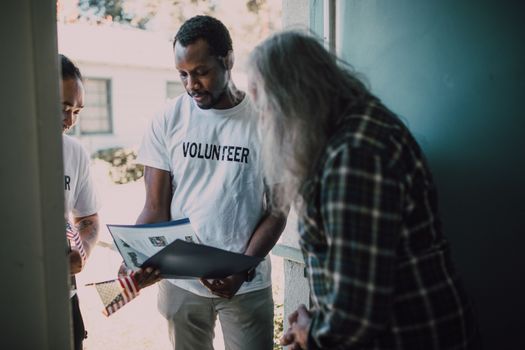
Volunteers visit a home to provide community support and discuss documents. Photo: RDNE Stock project / Pexels
Selecting the appropriate nonprofit consulting services in the US requires a thoughtful and strategic approach. It's not merely about finding a consultant, but about finding the right partner whose expertise, values, and approach align with your organization's unique culture and needs. The first step involves a thorough internal assessment: clearly define the problem you're trying to solve or the opportunity you want to seize. Are you struggling with fundraising? Do you need a new strategic plan? Is your board disengaged? Having a clear understanding of your needs will help narrow down the field of potential consultants and ensure you communicate your expectations effectively. Without this clarity, the engagement might lack focus and yield suboptimal results. Once your needs are defined, research potential consultants or firms. Look for those with demonstrated experience and a strong track record specifically within the nonprofit sector. General business consultants might have valuable skills, but those specializing in nonprofits understand the unique challenges, funding models, and regulatory environments that differentiate them from for-profit entities. Check their portfolios for similar projects, client testimonials, and case studies. Pay attention to their understanding of the specific sub-sector your nonprofit operates within, whether it's education, healthcare, environmental conservation, or social justice. A consultant with experience in your niche can hit the ground running with less need for foundational education about your field. Consider their methodology and approach. Do they emphasize collaboration and capacity building, or do they primarily offer prescriptive solutions? A good consultant will work with your team, transferring knowledge and building internal capabilities rather than simply doing the work for you. This collaborative approach ensures sustainability and empowers your staff long after the engagement concludes. Ask about their communication style, reporting mechanisms, and how they handle unforeseen challenges. Transparency and open communication are crucial for a successful partnership. Finally, evaluate proposals carefully, not just on cost, but on the proposed scope of work, deliverables, timeline, and the consultant's proposed team. Don't hesitate to interview multiple candidates and check references. Speak to other nonprofits they've worked with to get a candid assessment of their professionalism, effectiveness, and ability to deliver on promises. A strong cultural fit is also paramount; you'll be working closely with this individual or team, so ensure there's mutual respect and a shared commitment to your mission. The investment in the right nonprofit consulting services US can be transformative, so taking the time to make an informed decision is a critical investment in your organization's future success.

Avoiding Common Pitfalls and Maximizing Your Consulting Investment

A group of diverse volunteers engaging in a community service activity outdoors, providing aid and support. Photo: RDNE Stock project / Pexels
While nonprofit consulting services in the US offer immense value, organizations can sometimes fall into common traps that diminish the return on their investment. Being aware of these pitfalls and proactively addressing them can significantly enhance the success of your consulting engagement. One major mistake is failing to adequately prepare your internal team. An external consultant is not a magic bullet; their success often hinges on the cooperation, input, and buy-in from your staff and board. Ensure your team understands the purpose of the engagement, their roles in the process, and is prepared to dedicate time and resources. Lack of internal commitment can lead to delays, resistance to change, and ultimately, a failed project. Another pitfall is unclear expectations and scope creep. Before the engagement begins, establish clear, measurable objectives and a well-defined scope of work. What specific problems are being solved? What are the desired outcomes? What is explicitly NOT included? Regularly review progress against these agreed-upon parameters to prevent the project from expanding beyond its initial scope, which can lead to increased costs and missed deadlines. Regular check-ins and formal communication channels are vital for keeping everyone aligned. **Common Mistakes to Avoid:** * **Hiring without a clear problem statement:** Don't hire a consultant just because you feel you should; identify the specific challenge first. * **Ignoring internal knowledge:** Consultants bring external expertise, but your team holds invaluable institutional knowledge. Ensure both are leveraged. * **Lack of dedicated internal liaison:** Assigning a point person to work directly with the consultant streamlines communication and decision-making. * **Failing to implement recommendations:** The best strategy is useless if it's not put into action. Commit to implementing the consultant's advice. * **Underestimating the time commitment:** Consulting projects require active participation from your team, not just the consultant. * **Focusing solely on cost:** While budget is a factor, prioritize expertise, fit, and proven results over the cheapest option. * **Expecting immediate, miraculous results:** Sustainable change takes time and consistent effort. View consulting as a journey, not a quick fix. To maximize your investment, prioritize communication, actively participate in the process, and commit to implementing the recommendations. A consultant can provide the map, but your organization must drive the journey. By fostering a collaborative environment and holding both yourselves and the consultant accountable, you can ensure that your investment in nonprofit consulting services in the US translates into tangible, lasting improvements for your mission.

Comparison

FeatureLarge Consulting FirmBoutique Specialist FirmIndependent Consultant
Breadth of ServicesExtensive (Strategy, HR, IT, etc.)Niche-specific (e.g., fundraising, governance)Highly specialized (e.g., grant writing, specific strategy)Highly specialized (e.g., grant writing, specific strategy)
Cost StructureHighest (often retainer-based)Mid-rangeMost flexible/project-based
Personalized ApproachLess personalized, structured methodologyMore personalized, tailored solutionsHighly personalized, direct engagement
Access to ResourcesVast internal resources, researchCurated network, proprietary toolsLimited, relies on personal expertise
ScalabilityHigh capacity for large, complex projectsGood for focused projects, can scale with partnersBest for smaller, individual projects
Project SpeedCan be slower due to internal processesEfficient for defined scopesOften quicker for specific tasks
Cultural FitMay require adaptation to firm cultureOften strong cultural alignmentStrongest potential for personal fit

What Readers Say

"Our experience with nonprofit consulting services US was transformative. They helped us restructure our fundraising department, leading to a 25% increase in annual donations within the first year. Their team truly understood our mission."

Sarah Chen · Boston, MA

"We engaged a consultant for strategic planning, and the clarity they brought to our long-term vision was invaluable. The process was collaborative, and their insights were deeply rooted in the nonprofit sector's realities."

David Miller · Austin, TX

"Thanks to expert nonprofit consulting services US, we secured a major federal grant we'd been chasing for years. Their grant writing expertise and strategic guidance were the key difference-maker, truly impacting our community programs."

Maria Rodriguez · Seattle, WA

"The consulting firm provided excellent guidance on board governance. While the initial integration took some time, the long-term benefits in board engagement and efficiency are undeniable. A solid investment for organizational health."

John Kim · Chicago, IL

"As a small environmental nonprofit, we needed help scaling our volunteer programs. The nonprofit consulting services US we hired provided practical, implementable solutions that immediately boosted our capacity and community reach."

Emily White · Denver, CO

Frequently Asked Questions

What types of nonprofits benefit most from consulting services?

Any nonprofit, regardless of size or mission, can benefit from consulting services. Smaller organizations often seek help with fundraising and strategic planning, while larger ones might need support for organizational restructuring, leadership development, or complex program evaluations. The key is identifying a specific need that external expertise can address more efficiently or effectively than internal resources.

How much do nonprofit consulting services in the US typically cost?

Costs for nonprofit consulting vary widely based on the consultant's experience, the firm's size, the scope and duration of the project, and the specific services required. Rates can range from hourly fees ($100-$300+) for independent consultants to project-based fees (thousands to tens of thousands or more) for larger firms. Many consultants offer tiered pricing or packages, and some may work on a sliding scale for smaller organizations. It's crucial to get detailed proposals.

How do I find a reputable nonprofit consultant in the US?

Start by asking for referrals from peer organizations, board members, or funders. Industry associations like the National Council of Nonprofits or specific sub-sector groups often have directories or recommended consultants. Online searches, professional networking events, and platforms specializing in consulting services can also connect you with qualified experts. Always check references and review their track record.

Can nonprofit consultants help with grant writing?

Yes, many nonprofit consulting services in the US specialize in grant writing. They can assist with identifying suitable grant opportunities, developing compelling proposals, refining project budgets, and ensuring compliance with funder requirements. Their expertise can significantly increase your chances of securing competitive grants by crafting strong, persuasive applications.

What is the difference between a consultant and an interim executive?

A consultant typically provides expert advice, strategy, and project-based support to an organization's existing team, empowering them to implement solutions. An interim executive, on the other hand, temporarily fills a vacant senior leadership position (e.g., CEO, Development Director) and takes on direct management responsibilities to maintain continuity and guide the organization through a transition period.

Who should use nonprofit consulting services US?

Nonprofits experiencing significant growth or stagnation, those undergoing leadership transitions, facing complex strategic decisions, struggling with fundraising, needing to improve board effectiveness, or seeking to measure and communicate their impact more effectively should consider using nonprofit consulting services. Any organization looking for an objective perspective and specialized expertise to enhance its mission delivery can benefit.

Is hiring a consultant a sign of weakness for a nonprofit?

Absolutely not. Hiring a consultant is a sign of strategic strength and a commitment to continuous improvement. It demonstrates that an organization is proactive in addressing challenges, open to external expertise, and dedicated to maximizing its impact. Smart leaders recognize when external, specialized knowledge can accelerate progress and solve problems more efficiently than internal efforts alone.

What future trends are impacting nonprofit consulting?

Future trends impacting nonprofit consulting include an increased demand for data analytics and impact measurement, greater focus on diversity, equity, and inclusion (DEI) strategies, enhanced digital transformation and technology integration, and resilience planning in the face of global challenges. Consultants are adapting to offer specialized expertise in these evolving areas to help nonprofits stay relevant and effective.

Ready to elevate your nonprofit's impact and achieve your mission goals? Explore the tailored nonprofit consulting services US to find the expert guidance you need. Partner with experienced professionals who understand the unique challenges and opportunities of the sector, and unlock your organization's full potential today.

Topics: nonprofit consulting services USnonprofit strategy consultingfundraising consulting nonprofitnonprofit capacity buildingnonprofit management consulting
Leo List
Brampton weed
Adultwork